
Introduction

Delhi is a city where history and modernity exist side by side. Amid its heritage monuments, bustling streets, and expanding skyline, one landmark has undergone a remarkable evolution in recent years — Pragati Maidan in Delhi. Once known primarily as a trade fair venue, the redeveloped Pragati Maidan has now emerged as a symbol of modern Indian architecture, smart infrastructure, and urban transformation.
The architectural transformation of Pragati Maidan in Delhi reflects India’s ambition to create globally competitive convention and exhibition spaces while preserving cultural identity. With the addition of world-class facilities like Bharat Mandapam, integrated transportation systems, sustainable building features, and contemporary design aesthetics, the project has completely redefined the urban landscape of central Delhi.
For architects, urban planners, designers, and infrastructure enthusiasts, Pragati Maidan offers an inspiring case study of how large-scale redevelopment can balance functionality, sustainability, and visual excellence.
The Historical Significance of Pragati Maidan
Before understanding the modern redevelopment, it is important to recognize the historical value of Pragati Maidan in Delhi. Established in 1972, the venue was originally designed to host international exhibitions, trade fairs, and cultural events. Over the decades, it became one of India’s most recognized exhibition grounds.
The venue hosted iconic events such as the India International Trade Fair (IITF), attracting millions of visitors annually. However, as global exhibition standards evolved, the older infrastructure began facing challenges related to capacity, accessibility, parking, and modern visitor requirements.
The need for redevelopment became increasingly clear as Delhi aimed to strengthen its position as an international business and convention destination.
Vision Behind the Redevelopment


The transformation of Pragati Maidan in Delhi was not simply a renovation project; it was a comprehensive urban redevelopment initiative. The primary vision was to create a world-class International Exhibition-cum-Convention Centre (IECC) capable of competing with leading global convention hubs.
The redevelopment focused on several key objectives:
- Expanding exhibition capacity
- Improving traffic management
- Introducing sustainable architecture
- Enhancing visitor experience
- Creating flexible event spaces
- Integrating smart infrastructure systems
- Strengthening Delhi’s global business appeal
The project reflects the growing importance of architecture as a tool for economic development, urban branding, and international engagement.
Bharat Mandapam: The Architectural Highlight
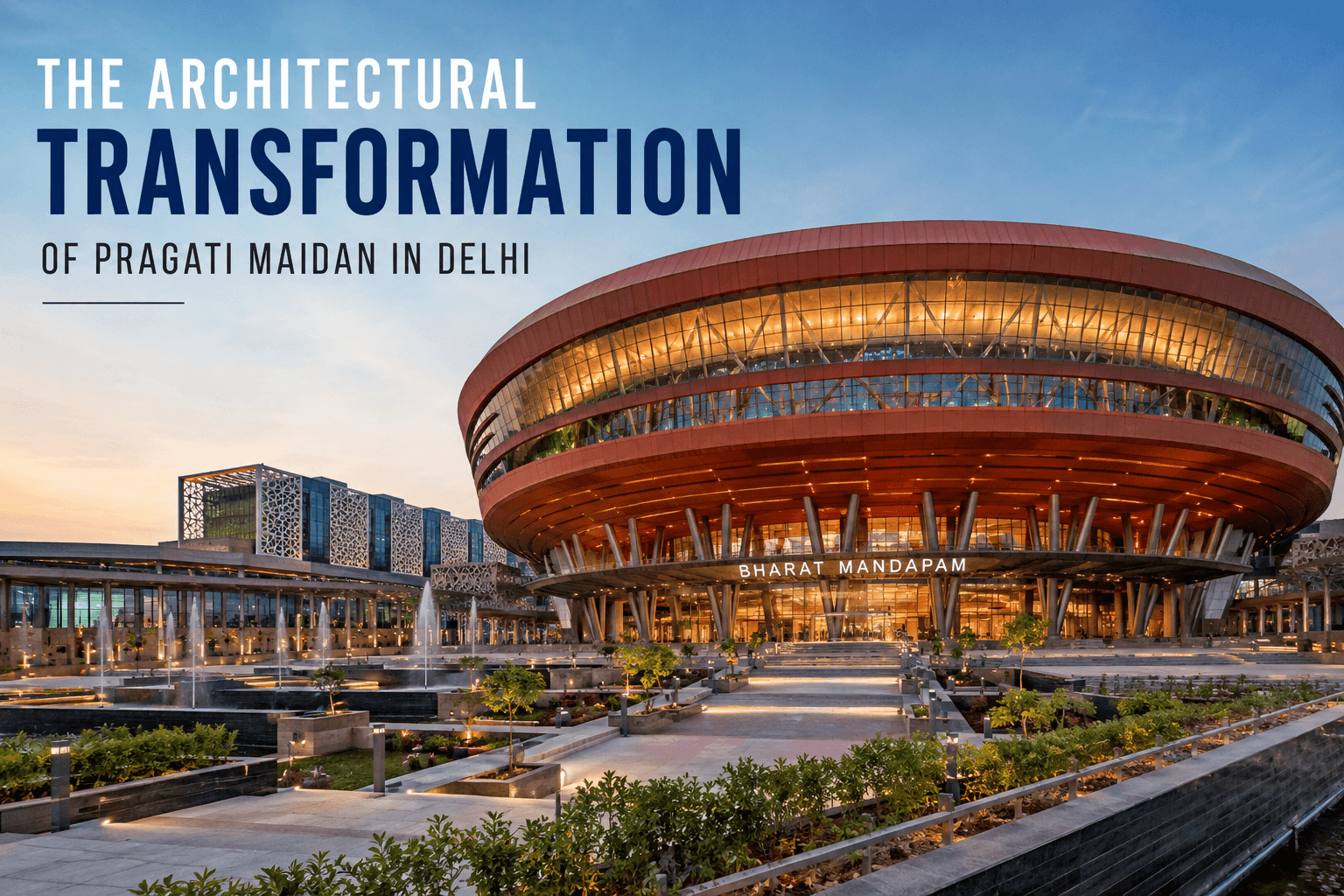
At the heart of the transformation lies Bharat Mandapam, the iconic convention center that has become the architectural centerpiece of Pragati Maidan in Delhi.
Designed with a contemporary Indian identity, Bharat Mandapam combines monumental scale with elegant detailing. The structure showcases how modern architecture can integrate cultural symbolism without appearing overly traditional.
The building’s façade, expansive glass surfaces, geometric forms, and open public spaces create a strong visual presence while maintaining functional efficiency. The architectural language reflects openness, connectivity, and innovation.
One of the most impressive aspects of Bharat Mandapam is its scale. The convention center includes massive exhibition halls, conference facilities, auditoriums, meeting rooms, and event spaces designed to accommodate international summits, exhibitions, and trade events.
The redevelopment has significantly elevated Delhi’s capability to host large-scale global events, including diplomatic gatherings and international conferences.
Modern Architectural Design Elements


The architectural transformation of Pragati Maidan in Delhi introduces several modern design principles that define contemporary public infrastructure.
1. Large Open Spaces
One of the key architectural features is the use of large-span structures that create flexible exhibition areas without excessive internal columns. This improves functionality while maintaining visual openness.
2. Glass and Steel Aesthetics
The extensive use of glass façades and steel framing creates a sleek, modern appearance. Natural lighting reduces energy consumption while enhancing the overall user experience.
3. Human-Centric Design
The redevelopment prioritizes pedestrian movement, accessibility, crowd management, and visitor comfort. Wide walkways, organized circulation paths, and intuitive spatial planning improve navigation throughout the complex.
4. Smart Infrastructure Integration
Modern convention centers require technological adaptability. Pragati Maidan incorporates smart lighting systems, digital communication networks, intelligent security systems, and integrated facility management technologies.
5. Sustainable Building Features
Sustainability plays a significant role in the project. Features such as rainwater harvesting, energy-efficient lighting, waste management systems, and optimized ventilation contribute to environmentally responsible architecture.
Urban Connectivity and Infrastructure Improvements
The redevelopment of Pragati Maidan in Delhi extends beyond architecture alone. It also includes major improvements in transportation and urban infrastructure.
The Integrated Transit Corridor (ITC) has dramatically improved connectivity in the surrounding area by reducing traffic congestion and enabling smoother vehicular movement. This infrastructure enhancement reflects how urban design and architecture must work together to improve city functionality.
Additionally, better metro connectivity, parking facilities, and pedestrian infrastructure have transformed visitor accessibility. The project demonstrates the importance of integrated urban planning in large-scale public developments.
The Role of Sustainable Architecture


Sustainability has become a defining factor in contemporary architecture, and Pragati Maidan in Delhi reflects this global shift.
Modern public buildings are expected to reduce environmental impact while maintaining operational efficiency. The redevelopment incorporates several green building strategies, including:
- Energy-efficient HVAC systems
- Natural daylight optimization
- Water conservation systems
- Smart waste management
- Eco-friendly construction materials
- Efficient landscape planning
These elements contribute to lower energy consumption and improved environmental performance.
The transformation also highlights how sustainable architecture is no longer optional but essential for future-ready urban development.
Cultural Identity in Contemporary Design
One of the most fascinating aspects of Pragati Maidan’s transformation is its balance between international modernism and Indian cultural identity.
Instead of replicating Western architectural styles, the redevelopment incorporates subtle references to Indian art, craftsmanship, and spatial traditions. Bharat Mandapam itself draws inspiration from Indian cultural symbolism while maintaining a distinctly modern appearance.
This approach reflects a growing trend in Indian architecture where designers seek to create globally appealing spaces rooted in local identity.
The result is architecture that feels modern yet contextually relevant — an important principle in successful urban design.
Economic and Urban Impact
The architectural transformation of Pragati Maidan in Delhi has had significant economic and urban implications.
Large convention and exhibition centers contribute to:
- Tourism growth
- Business networking
- International investment
- Hospitality development
- Employment generation
- Urban modernization
By upgrading Pragati Maidan to international standards, Delhi strengthens its ability to attract global events, exhibitions, and conferences. This not only benefits the local economy but also enhances the city’s international reputation.
For architects and urban planners, the project demonstrates how infrastructure development can influence broader economic ecosystems.
Architectural Lessons from Pragati Maidan

6
The redevelopment offers several important lessons for the architectural and design community.
Flexibility Matters
Modern public spaces must accommodate changing needs. Flexible layouts and modular event spaces increase long-term functionality.
Infrastructure and Architecture Must Align
A successful redevelopment project requires coordination between transportation, urban planning, landscape design, and architecture.
Sustainability is Essential
Environmentally conscious design improves long-term operational efficiency and public value.
Cultural Relevance Enhances Design
Architecture becomes more meaningful when it reflects local identity and cultural context.
Technology Shapes Modern Buildings
Smart systems and digital integration are becoming central to contemporary public architecture.
The Future of Public Architecture in India
The transformation of Pragati Maidan in Delhi represents a broader shift in India’s architectural landscape. Indian cities are increasingly investing in large-scale public infrastructure that combines functionality, aesthetics, sustainability, and technological advancement.
Projects like Pragati Maidan show how architecture can contribute to national identity while meeting international standards.
As India continues urban expansion and infrastructure modernization, architects will play a crucial role in shaping spaces that are efficient, inclusive, and future-ready.
The success of Pragati Maidan may also inspire similar redevelopment projects across other Indian metropolitan cities.
Conclusion
The architectural transformation of Pragati Maidan in Delhi is more than just a redevelopment project — it is a symbol of India’s evolving urban vision. From an aging exhibition ground to a world-class convention and exhibition destination, the transformation reflects innovation, sustainability, and architectural ambition.
With Bharat Mandapam at its center, Pragati Maidan now stands as an example of how modern architecture can successfully merge cultural identity, smart infrastructure, and global functionality.
For architects, designers, and urban planners, the project offers valuable insights into the future of public architecture in India. It demonstrates that thoughtful design has the power to reshape not only buildings but entire urban experiences.
As Delhi continues to evolve as a global city, Pragati Maidan in Delhi will remain a landmark representing progress, design excellence, and the future of contemporary Indian architecture.
Add a Comment